
Craft Corner: The Art of Diversion in Fiction No. 5

We’ve all heard the phrase, “Life is not a straight line.” This holds true not just for our own experiences, but also for the types of stories and lives of characters we encounter in stories. Yet, in fiction, the temptation often exists to create linear journeys, with heroes marching steadfastly towards their goals. But what about the detours, the unexpected turns, the moments where characters veer off course? These diversions, often dismissed as mere plot twists, can be the very essence of a character’s arc. 

To many writers, diversion is the creation of a surprise in a narrative, and the thrill of that surprise is what keeps the reader involved in the story. The word “diversion” has its first recorded use in England in the early 1600s.  It is believed that the concept of diversion bore some similarities with some elements of writing discussed in the treatise “On the Sublime” by the Greek philosopher, Longinus, but it became popularized by eighteenth-century writers who employed digression as a form of diversion. For Longinus, diversion, as a crucial literary device, suspends the reader’s sense of disbelief. Generally, in literature, it refers to the practice of including stories within the main story. The stories within the story are usually very brief and are often used to expound on a particular element of the main story. As Peter Selgin notes, by its very essence, a story is “an exercise in controlling information.” Writers must skillfully dole out knowledge to create patches of unknowledge – i.e., suspense – and keep the reader interested. Such diversion, in the form of well-timed revelations and withheld information, does not happen solely according to the creative strategy of the individual writer but adheres to a tradition as old as the stories themselves. The main purpose of a diversion is to create a sense of anticipation or to build enough suspense to keep the readers interested in the main story. A writer could also use this technique to provide the reader with some necessary background information that cannot be included in the main story or to help set up a climax. By using the different stories within the main story, the writer has a chance to provide a much wider view of the world. The reader gets various perspectives on different elements of the overall story. This can serve to make even the most fantastical of stories seem more real because it is demonstrated that different characters have different, opposing views and so on. Also, by giving the reader ‘breaks’ in the main plot where they get to read other smaller, self-contained stories, the writing becomes a lot more accessible and targeted to all kinds of readers.  

In simple terms, diversion in fiction, like other forms of display, seeks to do more than to decorate or to entertain the audience. When one witness in a court trial declares that, for example, defendant A did not break into a house, it is so easy for the audience to keep making wild, imaginary scenarios of how the burglary took place. However, the narrative, fabricated in their minds, is abruptly cut when the same witness suggests that in fact, the burglary did not even take place on the previous night as he claims to know, but on the night in question. By offering new, surprising twists to an on-going temporal narrative and deconstructing the audience’s version of the known events, the narrative gets a boost. Through diversion, we see the writer cleverly creating situations in which the reader’s anticipation is crafted to naturally expect a certain chain of events. This then allows the writer to break this chain and surprise the audience.  

It is of course important that writers should discern when to use diversion as a literary device in such that subplots, creation of cliffhangers at the end of chapters, adding in unexpected twists, deceptions, strategic revelation of information, and creating an open ending, all contribute to keeping the reader diverted. The reader feels smart when they catch the hints and forms expectations on how the story will unfold. At the same time, they become curious to find out whether the predictions are accurate as the plot progresses. In turn, by being engaged in the reading, emotions are evoked as the story takes the reader through different methods of diversion, making the reader experience the special and stunningly galvanized into plot and characters. For example, a well-timed twist can suggest hidden correlatives and themes. Or it can inject an unexpected viewpoint that might add a fresh sight or serve to emphasize thematic elements. Well-disciplined use of diversion often profound the reading. Readers may continue to explore to find out what each new turning and twist may uncover and can be delighted by success at prediction or stunned by a wily and subtle deception. This act of provocation is a delight to many readers who find the discovery and unraveling of solutions highly satisfying. In this manner, diversion enables the reader to be active on a metaphysical and emotional level. 

Again, when we think of how diversion can become a shrapnel for crafting the character arc, it becomes clear that characters are not robots programmed towards a predetermined conclusion. They are complex beings shaped by choices, experiences, and the unforeseen twists and turns of life. Through diversions, the writer can add depth, nuance, and a touch of the unpredictable to their journeys.  

Why does there need to be a twist in the plot in every story, you may ask? It is an interesting point to focus on, the real thing is that if one diverts someone’s attention, and then that other person will most probably be focused on other things, instead of finding out the truth. So, the reader will not try to discover the writer’s true opinion or where the story is set if it is made clear. If a writer is telling a story directly, then diversion would be in the form of flashbacks and maybe the introduction of more than one small puzzle, maybe a few more than two! It is remarkably interesting because if you take the definition out onto the internet or open books, you will find that diversion covers many different parts of stories, from characterizations to distinct types of diversion. 

It is important to consider some real-life examples of how diversion works. Fans of this literature will find various examples of distraction at work in short stories across the ages that have been written by a range of authors as well. A great example to start with is “The Purloined Letter,” written by Edgar Allan Poe and first published over 150 years ago. This classic short story is about the amateur detective C. Auguste Dupin as he attempts to retrieve an incriminating letter that is being used for blackmail. Throughout the story, there is a sense of deliberate, misleading information that is being given to the reader, which distracts from reality and makes it more difficult to discover the truth. This kind of diversion could further be used to create suspense within the reader as one avenue is explored after the other, each with its own sense of partial logic and progress. Another prominent example of diversion in short stories can be found in the work of Shirley Jackson and her famous short story called “The Lottery.” This tale of a small town that commits human sacrifice as part of the harvest ritual was first published in 1948, with some readers dismissing it as being nothing more than mere sensationalist horror. However, when looking deeply at the themes within the story, it becomes clear that Jackson has intentionally used diversion to guide the reader towards shock and distaste for the characters and society within the story. The use of detail to distract from the grotesque occurrences of the “lottery” and to prepare the reader for something entirely different is a key strategy; the fact that the ending comes as it does shows that diversion has been used effectively in this piece. Through exploring these examples of diversion in short stories, the message of how this works to create interesting and absorbing literature becomes clearer.  

While the town is small and it seems everyone knows each other, the truth is that it is completely isolated. The village serves as a dehumanizing environment that is resulting in a change in society. First, we can observe the irony of the town’s and the lottery’s name, as the lottery is commonly known to be a good thing to win and be a part of, but in this situation, the ‘prize’ is death. The first mention of tradition comes when the boys see each other and make a pile of stones. Soon after, the parents, especially the dad, are with the boys. He’s reminding the boy of how to arrange the stones and Jackson writes, “Bobby Martin has already stuffed his pockets full of stones, and the other boys soon followed his example, selecting the smoothest and roundest stones…” (Jackson, 2009). The author wanted to clearly show how even the youngest of the village knew what they were doing, what is the underlying meaning of this ritual, and how to bring the evil of the event to its success. This creates an atmosphere of horror as even the audience becomes aware that a successful prize of winning is death, as they see that everyone, children and adults, had taken part in organizing the lottery and preparing for it for the past few weeks. Finally, when the victims gain a voice after the winner has been selected and is going to die, they use ‘it isn’t fair, it isn’t right.’ It is a reminder that people and society do have the power to change things and that they’re not losing their voice to fear. 

-Aishat Babatunde, Mid-American Review 
In Honor of the Eclipse

As BGSU is abuzz with excitement for the total eclipse, we at MAR can’t help but consider how the moon has been reflected in literature, more specifically, poetry.  

The moon has been an object of curiosity since the beginning of time, with many cultures regarding the moon as a symbol of power that holds the essence of life and time, and the ways of the earth in its clutches. Cultures including the Greeks, Egyptians, Mayans, and Chinese worshiped the moon and associated many deities with it. The moon has consistently appeared a female deity due to similarity with the menstrual cycles and its fragile appearance when compared to the flaming power of the sun. 

Thus, with these associations, the moon in literature has been a divine source of female fertility, love, purity, romance, beauty, mystery, madness, and power. The history of the moon’s symbolism, its glowing appearance shrouded in darkness, and its continuous cycle of changing appearances have given writers a lot of freedom to display a variety of emotions and themes. Poets and writers such as Emily Dickenson, Shakespeare, Percy Shelly, Ted Hughes, and more have used ideas behind the moon to express raw emotion, change, and death. 

Eclipses are not as commonly written as the complete focus of a poem of piece of work, yet many poets mention eclipses to once again signify change or the tense relationship between two people or ideas. A beautiful example of these themes expressed in poetry is by the American poet Ella Wheeler Wilcox (1850-1919): 

In that great journey of the stars through space 

About the mighty, all-directing Sun, 

The pallid, faithful Moon, has been the one 

Companion of the earth. Her tender face, 

Pale with the swift, keep purpose of that race, 

Which at Time’s natal hour first begun, 

Shines ever on her lover as they run 

And lights his orbit with her silvery smile. 

Sometimes such passionate love doth in her rise, 

Down from her beaten path she softly slips, 

And with her mantle veils the Sun’s bold eyes, 

Then in the gloaming finds her lover’s lips. 

While far and near the men our world call wise 

See only that the Sun is in eclipse.  

Wilcox here uses her expression of the moon and the eclipse to express intimate love and change. As an activist, Wilcox also makes social commentary within this poem, noting that men at times only can acknowledge the masculine energy that they relate to (the sun), missing the beauty and the effort of the opposite sex (the moon). 

So, as we prepare to celebrate the eclipse, I encourage you as readers and writers to find your own favorite examples of the moon in poetry and ponder how the author uses the moon to carefully craft their narrative. Eclipses are more than just a special phenomenon, but a chance to express so much emotion and power within our own works. 

-Ellie Timmins, Mid-American Review 

Why We Chose It: “The Retch” by Colten Dom

Mid-American Review fiction staff selected “The Retch” by Colten Dom for publication in Volume XLII, Number 2.

“The Retch” is one of those stories that contains seemingly incompatible subjects: on the literal level, it is about dog vomit; on a thematic level, it delves into marriage, family, nostalgia. One of the pleasures of the story lies in this unexpected pairing, the way in which the surface conflict of the story subtly explores the underlying conflicts of the protagonist, Queenie, through a balance of pathos and humor. What starts as a fairly ordinary occurrence (the family dog, Bee, eating something she shouldn’t and throwing up on the carpet) quickly escalates into the absurd, as Bee begins regurgitating objects she couldn’t possibly have eaten. First, it’s items from the owners’ childhoods, then unnaturally large objects (“a golf club or an intact model ship”), and eventually orbs that resemble fish eggs “warm to the touch, with the texture of a flayed grape and the smell of a leather armchair gone rancid in the rain.” 

As evident in the above description, Dom’s language is striking, with attention to sensory details that make even the impossible feel physically real. The opening paragraph is rich in sensory details packed into rhythmic sentences: “There are hooks made of sound: the slap of sex, the generic jingle of the nightly news or the cacophony of your husband sneezing. There are pop song sippets of adolescence, guitar licks that drag you back to high school. And jaunty radio realty commercials, dropping through time to mom and dad and the typical divorce, leaving your childhood toys behind to guard the leaky attic where they became toothpicks for a family of raccoons.” The poetic syntax, alongside the story’s absurdity, renders the familiar conflicts of domestic life unfamiliar and therefore new.

The story as a whole is built around pattern—Bee vomiting increasingly unbelievable things—but continually moves in directions the reader could not anticipate. George Saunders, writing about Donald Barthelme’s “The School,” describes this kind of structure as a series of “gas-stations” that propel the reader forward. While advancing the pattern, the writer “fling[s] us forward via a series of surprises; each new pattern-element is. . . introduced in a way we don’t expect, or with an embellishment that delights us” (177). The patterns and surprises of “The Retch” accelerate the story forward in unexpected, but nonetheless fitting, directions. The ending, in which Bee vomits a web that slowly forms into a house, provokes questions about Queenie’s relationship to the domestic sphere and her family, particularly things she has kept inside herself that ultimately must come out, however messy and unpleasant that might be.

––Jane Wageman, Mid-American Review

Note from the editors: This essay contains a quote from “The Perfect Gerbil: Reading Barthelme’s ‘The School'” from The Braindead Megaphone by George Saunders. New York, NY: Riverhead Books, 2007, pp. 175-185.

Interview with Jose Hernandez Diaz, On Poetry & Publishing No. 16

Jose Hernandez Diaz is a 2017 NEA Poetry Fellow. He is the author of The Fire Eater (Texas Review Press, 2020) Bad Mexican, Bad American (Acre Books, 2024), The Parachutist (Sundress Publications, 2025) and Portrait of the Artist as a Brown Man (Red Hen Press, 2025). He has been published in The Yale Review, The London Magazine, and in The Southern Review. He teaches generative workshops for Hugo House, Lighthouse Writers Workshops, The Writer’s Center, and elsewhere. Additionally, he serves as a Poetry Mentor in The Adroit Journal Summer Mentorship Program.

I really fell in love with the poems in Bad Mexican, Bad American. The poems in the first section are largely in verse and the rest of the collection’s three sections have poems exclusively in prose: How do you view this book’s relationship between the poems in lineation and the poems in prose?

The first section, in linear verse, tends to be autobiographical poetry about my real life growing up first-gen Mexican American, back and forth between Northern Orange County and Southeast Los Angeles. There are a few prose poems in the first section, however, that are not entirely autobiographical.

The rest of the book is written in prose poetry, often surreal, often absurdist, often with Mexican and Mexican American imagery and/or settings. As far as why dual or varied aesthetics/forms? I like to play the blues, Ranchera, psychedelic and Mariachi. I try not to put limits, borders, or boundaries on myself.

Bad Mexican, Bad American feels very close to the poet but also, at other times, feels distant. How do you view the relationship between the poet and the speaker in this collection?

Yes, some of the poems are more confessional, personal, autobiographical. Others are more surreal, absurd, and existential. I contain multitudes as Whitman said. 

I thought about separating the books into separate collections: autobiographical linear verse and prose poetry, but then thought: no, I’ll mix it up as it is a closer representation of my complex self and my hybrid aesthetics… more representative than if I split the books into only showcasing one style or aesthetic. Plus, I hadn’t really seen such a varied voice or aesthetic in other contemporary poetry books, so I thought: why not break boundaries and be different/innovative.

You had The Fire Eater (Texas Review Press) publish in 2020 and Bad Mexican, Bad American (Acre Books) publish this year and two collections, The Parachutist (Sundress Publications) and Portrait of the Artist as a Brown Man (Red Hen Press), forthcoming in 2025: How has this success and exposure impacted your writing?

I have been more calm lately in terms of not feeling as much pressure to write. Trying to balance my life out more, not just as focused on the writing. Teaching more. Going to more readings. Early on I felt more pressure to have a book published and out in the world. Now, I want to enjoy being an author with various books out and on the way and no pressure to produce. Can take a deep breath and enjoy the fruits of my labor. 

The first poem of yours I ever read was “The Jaguar and the Mango” from the January 2020 issue of Poetry Magazine which is a prose poem. Why is the prose poem the perfect form for this sort of personified exploration in the poem?

I think it is the perfect form for condensed writing and you can still get a scene or an angle of storytelling in. Sometimes we just need a window into a scene not the whole backstory and inner monologues. We sometimes want to fill in the blanks on our own. Minimalism, haiku, short stories, have always been fascinating to me for their brevity and intensified mode/power of expression.

Your chapbook The Fire Eater is all prose poems and Bad Mexican, Bad American is primarily prose poems. What is it about the prose poem form that keeps you returning to it?

It hasn’t gotten old to me. I still love writing a vibrant prose poem. The discovery, spontaneity, freedom, The associative leaps. The imagination, The pace of it, musicality. The voice. The persona. The art of condensed writing.

There’s a lot of discourse surrounding the composing of poems in lineation and poems in prose. Do you feel that the form dictates how you approach writing the poem?

For me: my autobiographical work tends to be primarily in linear verse while my fictional or surreal work tends to be in prose poetry. Not always, but generally this is how it works for me.

After drafting a poem, how do you approach revision?

After getting the first draft on the page I will go back and read it to myself until I get it just right paying attention to line break and form if it’s a poem, specificity of imagery, do I need more description, or less description, musicality, titles, awkward moments which need to be blended in a seamless way, and overall wow factor, does the poem leave me wanting to read it over and over in awe..

Your publications range from first issues of magazines to well-established journals, what advice do you have for emerging writers who are submitting their poems to literary magazines/journals?

I like to have a range of submissions and publications. Would be a long and boring wait if I only submitted to the heavy hitters. It also feels good to be part of a journal’s early issues and help get them off to a good start. This is a poetry community and oftentimes you can connect more with smaller journals. With that said I like to be in fancy journals like anyone else, can’t deny it, so I always send out to dream journals as well even though they require more patience and perseverance. 

My advice: prolific writers are always prolific readers first, rejections don’t always mean bad, talent is important and worth ethic but also we must have the ability to bounce back in the face of constant rejection and knock on doors to places we might feel like are too big for us or we’re imposters for trying to get into.

Bad Mexican, Bad American is a collection that challenges its readers, but it’s also a collection that allows the reader to have some fun as well. When you’re reading a collection, what is it about the experience that makes a book spectacular for you?

I love getting pulled into the language, storyline, imagery, voice, persona, politics, struggle, humor, craft of it, passion of it, duende, Kafkaesque quality, deadpan, codeswitching, Spanglish, barrio poems, hood poems, surrealism, gritty realism, honesty, vulnerability, empowerment, love.

For writers soon to be leaving MFA programs, what is a piece of advice you wish you had coming out of your MFA program?

The book publication process is a marathon not a sprint. Time will help the process. Patience is difficult but a virtue. Time also allows for fresh eyes with revision. Enjoy the small victories along the way. Don’t compare yourself to other writers though this is hard to avoid. Treat others how you want to be treated. Call your parents, if they’re supportive, on the weekend.

***

––Tyler Michael Jacobs, Blog Co-Editor

Meet the MAR Interns – and our food critics!

Who are we:

I’m Carlee (she/her), an English major who has been reading poetry for MAR for two semesters. My most recent read was Don’t Call Us Dead by Danez Smith. It was evocative and powerful and I highly recommend it.  

Fun Facts: I am a self-proclaimed germaphobe but I will eat food off the floor because people have germs but floors do not. I can’t swim (yes I can but no one wants to see that). My favorite office snack is the fruit leather. 

I’m Eftihia (she/her), a Creative Writing major and this is my first semester reading for MAR on the fiction side! Unlike my fellow interns, I am a great swimmer as I went to swim classes at a very young age and go to the beach every summer for vacation to practice my skills in the ocean. Another fact about me is that I love dragons! I think they’re amazing and I know a bunch of different facts about them, like how there are 12 different types and one of them is called the cockatrice. If you have any recommendations for fantasy books with dragons or are writing one yourself, I’d love to read it.  

I’m Gretchen (she/her), a Creative Writing major with a film minor (and a scientific and technical communication minor but that doesn’t sound as cool). This is my second semester reading for MAR as a fiction editor. Like Carlee, I suck at swimming which is so embarrassing because three of my cousins swam in high school and one in college. Imagine going on family vacations and everyone is professionally lapping you. I went to swim lessons, I just refused to learn because it was boring. Another fun fact is my brother got really into writing Yelp reviews, and I was so jealous that I wrote over one hundred Yelp reviews, and now I am a part of the ‘Yelp Elite Squad.’  

I’m Jenna (she/her), a Creative Writing major and Word & Image minor. This is my first semester as a fiction reader for MAR. I’m an avid illustrator and enjoy reading old entomology books (I highly recommend Jean-Henri “Insect Homer” Fabre’s works). I’m a big fan of wasps, and like wasps, I, too, cannot swim–unless we’re talking about the Microgaster godzilla wasp, in which case: watch out! 

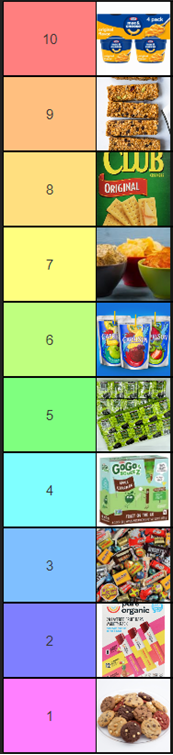
Past and present interns voted for their favorite office snack and these are the cumulative results from worst to best:  

  • Mac n Cheese- We came to a consensus on this one, it might be because of the high levels of dairy avoidance in the MAR population. 
  • Granola Bars 
  • Crackers 
  • Chips 
  • Capri Suns 
  • Seaweed- This snack’s rankings were all over the place, some people love it, some people hate it, but no matter where anyone stands, they all seem pretty passionate about it. 
  • Applesauce 
  • Candy 
  • Fruit Leather
  • Cookies – another one we all agreed on

Yelp Reviews of the MAR intern office: 

★★★★★ 

Jenna: I love the MAR office! I don’t know why, but a lot of people complain about the desk drawer. 

★★★★☆ 

Carlee: Very comfy chair, good snacks, good company. The desk drawer is a little too loud for my liking. Also a little chilly, but they have blankets 🙂  

★★★★☆ 

Gretchen: Every single time it gets quiet in this office and everyone’s all focused and scholarly, I BANG my knee against the desk, and everyone pretends not to hear it, but it’s humiliating. Very blessed, though, to be with such cool people and a wide variety of snacks. Would visit again. 

★★★★☆ 

Eftihia: The atmosphere is great, and there’s good company. I also really like the comfy chair. But, the desk drawer never goes all the way in and makes loud bangs whenever you try to close it.  

★★☆☆☆ 

Ant: They tried to feed me stale crumbs from Carlee’s backpack. Ew. I want the good stuff. Environment lowkey fire tho.