Learning with Todd Kaneko: Championship Edition

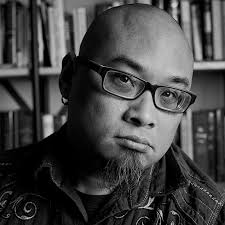
Black and white photo of man with glasses and goatee: Todd Kaneko

Staff member Elijah Woodruff sat down to chat with visiting reader Todd Kaneko. Here is some of the wisdom he gathered!

On the Line & Stanzas

When explaining his approach to writing a line of poetry, Kaneko emphasized that while crafting a line, he thinks toward the end of the line through the lens of syntax, working out what the next line of the poem would be based on the line break he was working toward. He had a lot of friends who wrote poems out in chunks before they began the process of lineation. He compared it to writing sentences with no periods. That kind of process didn’t work for him.

And he approached the stanza as a line break “on steroids” for shifting the poem’s focal distance or topic in a rhetorical sense. What mattered when constructing stanzas was the relationship the poet and reader had with the text of the poem. What was difficult to parse in a poem might be made clear by breaking the line or breaking for the stanza. But despite this, sometimes, Kaneko said, he would write in quatrains. It was simply a matter of needing “a rule to survive the draft of a poem.”

But inversely, sometimes the poem drew too much attention to what it was trying to do through a stanza or line break and might need to be unified to layer over what had become an exposed seam. Kaneko said, ultimately “it always comes down to did make senses for the poem.”

On Navigating the Responsibilities of the Real World as a Writer

Todd Kaneko is the kind of writer who gets lost in the dream, but that makes it difficult to navigate the world he’s creating and the real world with all its responsibilities. Writing long form fiction required getting into the dream and then disentangling himself from what he had created which according to Kaneko was difficult to do especially with children. He had to find both the time and the correct form for his writing to be able to continue to produce work.

This is how Kaneko found his way into poetry: as a way to finish drafts to free himself of that dream world that was too difficult to pick up after he’d left it incomplete. He could return to a poem because the initial draft could be finished in as little as a day. This was how he navigated a world of responsibilities that told him, “don’t write because you got to pay your bills.

On the Process of Creating a book

Originally, This is How the Bones Sing was a much longer project—almost double. With that version, Kaneko received semi-finalist and finalist recognition from poetry contests, but no one wanted to publish it. Kaneko decided that the original version of the book wasn’t good enough despite his circle of poets and readers telling him that he would get published next time.

“You know that it’s a lie,” Kaneko said. “It doesn’t happen next time. Since no one wanted to publish it, it just wasn’t good enough.” He shelved the project for The Dead Wrestler Elegies.

When he returned to the project, he decided to remove half the poems, but as he removed the poems that were extraneous to the manuscript, he found that the necessary structure of the book changed.

Finally, Kaneko spoke of his struggle on putting together the manuscript with his father’s death highlighting the unique challenge posed by each new collection of poetry and the way a poet can choose to order certain poems to highlight movements, key ideas, and symbols within a text.

W. Todd Kaneko is the author of This is How the Bone Sings (Black Lawrence Press 2020) and The Dead Wrestler Elegies, Championship Edition (New Michigan Press 2023). He is co-author with Amorak Huey of Poetry: A Writers’ Guide and Anthology (Bloomsbury Academic 2018, second edition 2024), and Slash / Slash, winner of the 2020 Diode Editions Chapbook Contest. 

His poems, essays, and stories can be seen in Poetry, Alaskan Quarterly Review, Los Angeles Review, The Normal School, Hobart, [PANK], Blackbird, The Rumpus, Song of the Owashtanong: Grand Rapids Poetry in the 21st Century, Bring the Noise: The Best Pop Culture Essays from Barrelhouse Magazine , Best Small Fictions 2017 and 2018, and many other journals and anthologies.

He holds degrees from Arizona State University (MFA, Creative Writing) and the University of Washington (BA, English). His work has been nominated for Best of the Net and the Pushcart Prize. Originally from Seattle, he is currently an Associate Professor in the Writing Department at Grand Valley State University and lives with his family in Grand Rapids, Michigan.
Why We Chose It: “Rhode Island Swans” by Monica Fields

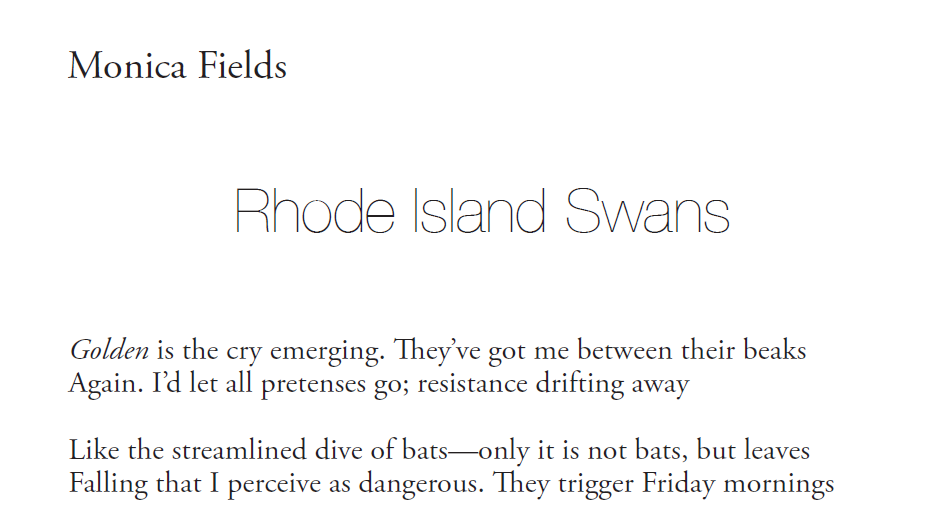
Top of poem from MAR volume 44

“Rhode Island Swans” is a poem that transports you back to one of the speaker’s childhood memories through the eyes of her adult self. Describing the scene, “as it was in 1989, / and know[ing] the fine tremor of disorder,” the speaker reflects on feeding popcorn to swans at the park with her mother and brother; however, it’s not as blissful as it sounds. This poem is heavy with disorder, danger, wrath, and indifference.

It begins with: “Golden is the cry emerging. They’ve got me between their beaks / Again.” We as readers automatically question a few things: Why is the cry golden, and is it emerging from the speaker or the Rhode Island swans? In what way is the speaker between their beaks? The poem unfolds from this into images of falling leaves mistaken for swarming bats, and then into the scene of the swans being fed by the family. But the swan feeding scene is deceptively calm.

The description of the swans as, “cruel birds that would strike, defending / Their own beauty,” transforms the image into an uneasy representation of the family. Beauty and aggression linger in every part of this poem. Typically, we romanticize swans as alluring creatures, and we romanticize past memories and build them up to be something that they never truly were. However, memories can change over time, and swans can be angry and territorial.

I find it fascinating that the speaker admits these swans haunt her in dreams from “feathered enclosures,” in the present as she reflects on this memory.  When she sees swan boats in the city, the memory of the swans from Rhode Island resurfaces. “Wrath, they tell me. Power.” In this moment, the swans take on weight beyond the childhood scene itself, and represent the instability of power that the younger version of the speaker might not have recognized at that time.

This poem articulates meanings from a memory that can only be cultivated through distance and the passage of time. “I am the cry emerging and the hand covering my mouth,” she says, recognizing the power and fear she now carries with her.

––Tyler McDonald, Mid-American Review 

Winter Wheat ‘25 in Review by Gayle L. Castle

Winter Wheat Writing Festival logo--orange pencil with wheat stalk

This year’s Winter Wheat Festival of Writing, November 6-8, 2025, was a celebration of twenty-five years of enduring passion for the art of writing on the campus of Bowling Green State University. The events from this year encompassed workshop sessions, a bookfair, two guest reading sessions, Friday Night Game Night, Winter Yeet! (a burning of our detested drafts), and the Open Mic & Reception followed by the finale of the Flash Fiction Battle to the Death.

My first session as a first-time participant was “New Perspective: Exploring the Effect of Writing in Strange Points of View” with Emilea Justice. This topic was a cross-genre exploration of writing from different points of view. I was immediately drawn into this journey by the expertise and preparedness of the presenter. Emilea connected well with the audience as she delivered her knowledge with a calm and friendly demeanor. I appreciated her insights and suggestions for both poetry and prose ideas and questions to consider. She also encouraged the participants to explore using different points of view as we took time to write in the session. I came away from this session feeling more knowledgeable and more willing to try something new. I also have two pages of notes and a solid piece of new writing that I want to add to my portfolio.

“Ekphrasis in Poetry: The Art of Essence,” with Mo Orr and Elijah Woodruff, was an immersion into ekphrastic art and poetry. This Saturday morning session began the final day with a fantastic description of ekphrasis and how to approach incorporating it into a poem. The presentation was virtually seamless, even with a small unavoidable technical glitch that was handled by the team with grace and humor. The writing portion of this session was extremely helpful in sealing the understanding of the content. As a participant, I valued the variety of artwork employed and the connections we studied of an ekphrastic poem in relation to three films prior to writing.

I also attended a zoom session from Canada, “Myth, Fairy Tales, and Folklore: The Art of Retelling in Short Fiction and Poetry” by Anastasios Mihalopolous. This was a richly laden session of well-researched information and ideas of the integrity of these works as well as useful and artful methods of developing a personal version of retelling while paying tribute to the ethics in the retelling itself. This workshop included two shorter periods of writing instead of one longer period, allowing the start of two new pieces for the participants. The presenter worked easily with the Winter Wheat zoom moderator to ensure a smooth pacing of this session. I was highly encouraged that we were given a list of places to send our writing for these particular topics for our future submissions reference.

My own session presentation, “Who We Are: Creating an “I Am” Poem from Collage Items and Words,” was a successful venture into viewing and realizing the value of crafting the “I Am” personalized box and poem for writers. Although I have presented often for musical workshops, this was my first foray into presenting as a creative writer. It was interesting to me as a presenter to note that though many of the participants seemed to absorb the premise of both of these aspects, there was a small number of people who shared that the singularity of either the act of making the box or the act of creating the poem was more helpful to them. I was especially thrilled when an initially doubting participant approached me after the session, exclaiming over the meaningfulness of the activity to them, success!

As a new participant and presenter to the Winter Wheat Festival of Writing, I must say how grateful I am for this fantastic venue. The chance to build community through meeting new and old writing friends, to connect with the Mid-American Review readership, to learn new techniques and styles, to write and share within new experiences, and to shop an onsite bookfair all in one place is an amazing occurrence, and unbelievably at no cost. My sincere gratitude I extend to everyone who contributed to this event, and especially to Hannah Goss, Winter Wheat Coordinator, and Abigail Cloud, our fearless leader. I will be a gatherer of Winter Wheat for life.

Page Turning with Our MFAs

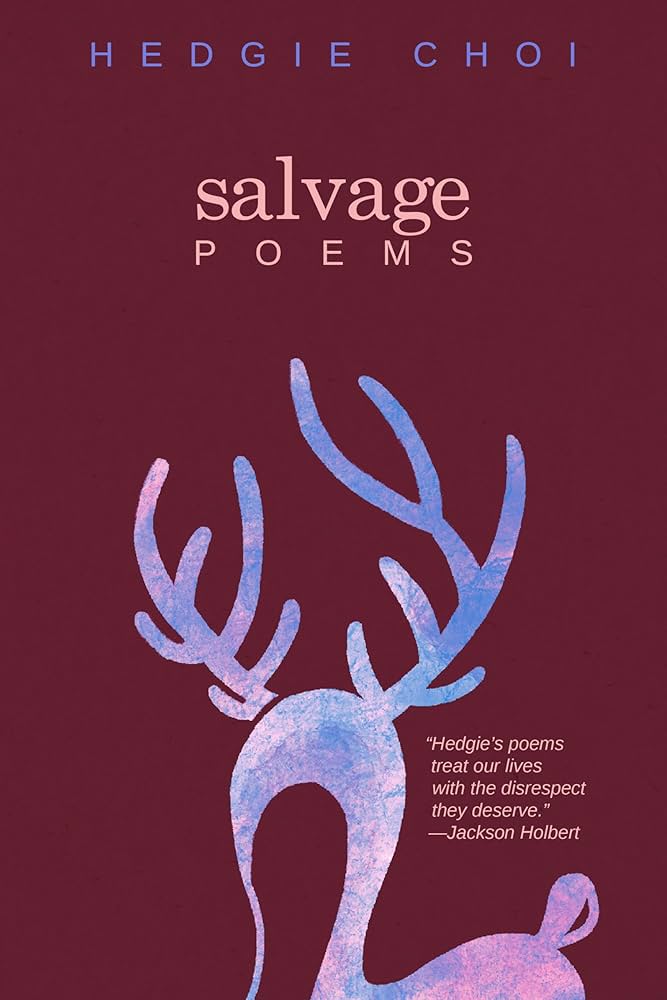
Dark red background with ghostly antlers; Hedgie Choi book cover

Recent and Current Reads

Annie Williams, 1st Year Poet: Salvage by Hedgie Choi (Poetry), The Bee String by Paul Murray (Literary Fiction), and Smashed by Junji Ito (Horror Manga)

Tyler McDonald, 1st Year Poet: The Pillow Book by Sei Shonagon (Essays), Invisible Strings edited by Kristie Frederick Daugherty (Taylor Swift-Inspired Poetry Anthology) and Wicked by Gregory Maguire (Fantasy)

Gayle Castle, 1st Year Poet: Poemcrazy by Susan Goldsmith Woolridge (Poetry Craft Book)

Emilea Justice, 1st Year Fiction: The Glass Castle by Jeanette Walls (Memoir)

Kelly McElroy, 1st Year Fiction: No Country for Old Men by Cormac McCarthy (Fiction)

Orion Emerick, 1st Year Fiction: Boy Island by Leo Fox (Speculative Trans Fiction Graphic Novel)

Mo Orr, 1st Year Poet: Selected Poetry Collection of Rita Dova (Poetry) and How We Fight For Our Lives by Saeed Jones (Memoir)

Elijah Woodruff, 1st Year Poet: The Circle Hanh by Bruce Weigl (Memoir)

Kiersten Burtz, 1st Year Fiction: This Is How You Lose The Time War by Amal-El-Mohtar (Science Fiction)

Alex Wagner, 1st Year Fiction: Guards! Guards! By Terry Pratchett (Fantasy)

Liz Barnett, 2nd Year Fiction: The Buffalo Hunter by Stephen Graham Jones (Horror)

Hannah Goss, 2nd Year Fiction: Mothers, Tell Your Daughters by Bonnie Jo Campbell (Short Story Collection, Literary Realism)

Jaden Gootjes, 2nd Year Fiction: Poverty, By America by Matthew Desmond (Nonfiction)

Gathered by: Annie Williams

Which Winter Wheat Workshop Should You Attend?: A Flowchart

Winter Wheat arrives this week! Still deciding which workshops to attend? Check out one of these easy flowcharts that our interns made to help you decide!

Choose your own Winter Wheat adventure here: https://www.sharecanvas.io/p/winter-wheat-quiz

Or, view our suggested pathways here: https://www.sharecanvas.io/p/winter-wheat-pathways

Have we convinced you to attend yet? If so, you can still register here!