Winter Wheat 2016: Poetry Panel Features

The Winter Wheat Festival of Writing is just around the corner! We have dozens of great and intriguing panels for you to attend, from poetry, fiction, nonfiction, publishing, techniques, and new ideas for your own writing.

Are you a poet or just love poetry? Take a look at these 5 panels that are poetry-focused:


“The Poetic Image as Communication,” with Jacob Hall

We will have a discussion on the utility of the poetic image as a means of communicating theme, narrative, sense, and emotion within a poem. This will involve exploring hypothetical uses of image as a means of communication, as well as examining works from a range of poets who utilize the communicative image within their poems. Finally, we will have a workshop in which attendees will work to craft their own poetic images intended to communicate with a reader.

Jacob Hall is a second-year MFA candidate in creative writing at BGSU. He serves as the assistant poetry editor for Mid-American Review.

(this workshop will be held on Friday, November 4th from 3:00-4:15pm. If you’re interested in attending this workshop, select A2 when you register!)


“Rhythm. Rhythm. Rhythm. Rhythm.” with Abigail Cloud

An old Sesame Street music scene begins with those words and continues on to study objects that make distinct rhythms. Why is rhythm so often hard for us to grasp as adults? In this workshop we’ll experiment with ways to charge our poetic language rhythmically, whether or not we’re following a meter.

 Abigail Cloud teaches creative writing, editing, and publishing at BGSU and serves as editor-in-chief of Mid-American Review. Her book, Sylph (Pleiades, 2015), won the 2014 Lena-Miles Wever Todd Prize.

(this workshop will be held on Friday, November 4th from 4:30-5:45pm. If you’re interested in attending this workshop, select B2 when you register!)


“The Contemporary Ode,” with Katrina Vandenberg

Poet C.D. Wright said that the ode is “one of the few literary tendencies left on the lot that admits wonder and presumes a future.” In this hands-on workshop, we’ll examine what it means in 2016 to celebrate and wonder, noting strategies of contemporary ode writers like Ross Gay, Sharon Olds, Pablo Neruda, Lucille Clifton, and others, then put those strategies to work on the page as we create new work.

Katrina Vandenberg is the author of two books of poems, The Alphabet Not Unlike the World (2012) and Atlas(2004), both from Milkweed. She teaches in The Creative Writing Program at Hamline University, and serves as poetry editor for Water~Stone Review. She is co-attending the FUSE conference as founding editor of the undergraduate magazine Runestone. www.katrinavandenberg.com

(this workshop will be held on Saturday, November 5th from 9:30-10:45am. If you’re interested in attending this workshop, select C8 when you register!)


“Write Yourself as You Are, with Purpose: Feminism & Poetry,” with Roseanna Boswell

Adrienne Rich wrote, “the moment a feeling enters a body, is political,” suggesting that the intersection of feelings and bodies is political, which means that poetry is political. Helene Cixous demanded: “write yourself. Your body must be heard,” because we must meet ourselves in our own words, our own bodies, and not settle for someone else’s perspective. Writing poetry is not just political for the listener or reader then, but also for the writer who is claiming their voice as a valuable one. In this workshop we will discuss using poetry as a means of accessing identity, and attendees will be given the chance to draft poems with this goal in mind.

Roseanna Boswell is a poetry MFA candidate at BGSU in Ohio. Her writing focuses primarily on the voices of girls and women, and seeks to explore and interrogate traditional notions of femininity as related to gender, sexuality, and body image.

(this workshop will be held on Saturday, November 5th from 11:00-12:15pm. If you’re interested in attending this workshop, select D2 when you register!)


“(Re)combining Poetic Sensibilities,” with Brandon North

Centos, erasures, Google sculpting, and other recombinant methods of composing poems are helpful with the metacognition of one’s poetic sensibilities. For both the student and experienced writer, composing with gathered materials is useful in reorienting, honing, or expanding one’s sense of what is possible in a piece of writing. In this workshop, we will try out several methods of composing found poetry with an eye toward critically investigating why we might use, choose, and/or combine words/phrases/sentences in crafting poems. After writing through each method, we will discuss the aesthetics we find ourselves leaning toward, both personally and collectively.

Brandon North is a second-year poet in the NEOMFA program and holds an MA in literature from Wright State University. His work appears or is forthcoming in decomP and UnLost. He redirects energy at centeringspirals.blogspot.com.

(this workshop will be held on Saturday, November 5th from 1:30-2:45pm. If you’re interested in attending this workshop, select E6 when you register!)


Check out these and other great panels on our website:
WINTER WHEAT

Chapbook Review: Whip and Spur by Iver Arnegard

Whip and Spur by Iver Arnegard. The University of Southern California: Gold Line Press, 2014. 64 pages. Paperback.

In this stunning collection of six pieces of fiction, author Iver Arnegard takes readers on a journey through the Northern Plains—stopping in locations in Montana, North Dakota, and Colorado to name a few. With each new location, Arnegard makes us feel at home as we explore the human and nature struggles that his characters are battling. We begin our adventure with “Ice Fishing”, where a man reflects on a woman that appeared just as quickly as she disappeared from his life, and follow other characters such as the woman in “Recluse” who tries to connect herself with the man with the pale eyes, as well as Eric in “Made of Land or Water”, who returns home to North Dakota to deal with his hatred for his deceased father.

While keeping with traditional story forms, Arnegard also takes new approaches in “Seventeen Fences” and “What Rises”, breaking sections off by numbers that hold importance to the telling of the story. But perhaps what is more interesting is Arnegard’s use of close setting and detailed location in each story presented: “If you have an old map, you might still find Farland, North Dakota: the sod post office writhing with moles and the Wagon Wheel Inn, glass shot out of each pane, front doorway open and choked by a knot of tumbleweeds. And if you care to stop and untangle the years, you’ll find the last great boom when the price of wheat was up, cattle prices up, even water in the rain gauge up.” Arnegard’s talent for placing readers into his settings is magnificent, and something that stands out exponentially in Whip and Spur.

-Olivia Buzzacco, MAR

Pets with MAR: Ori

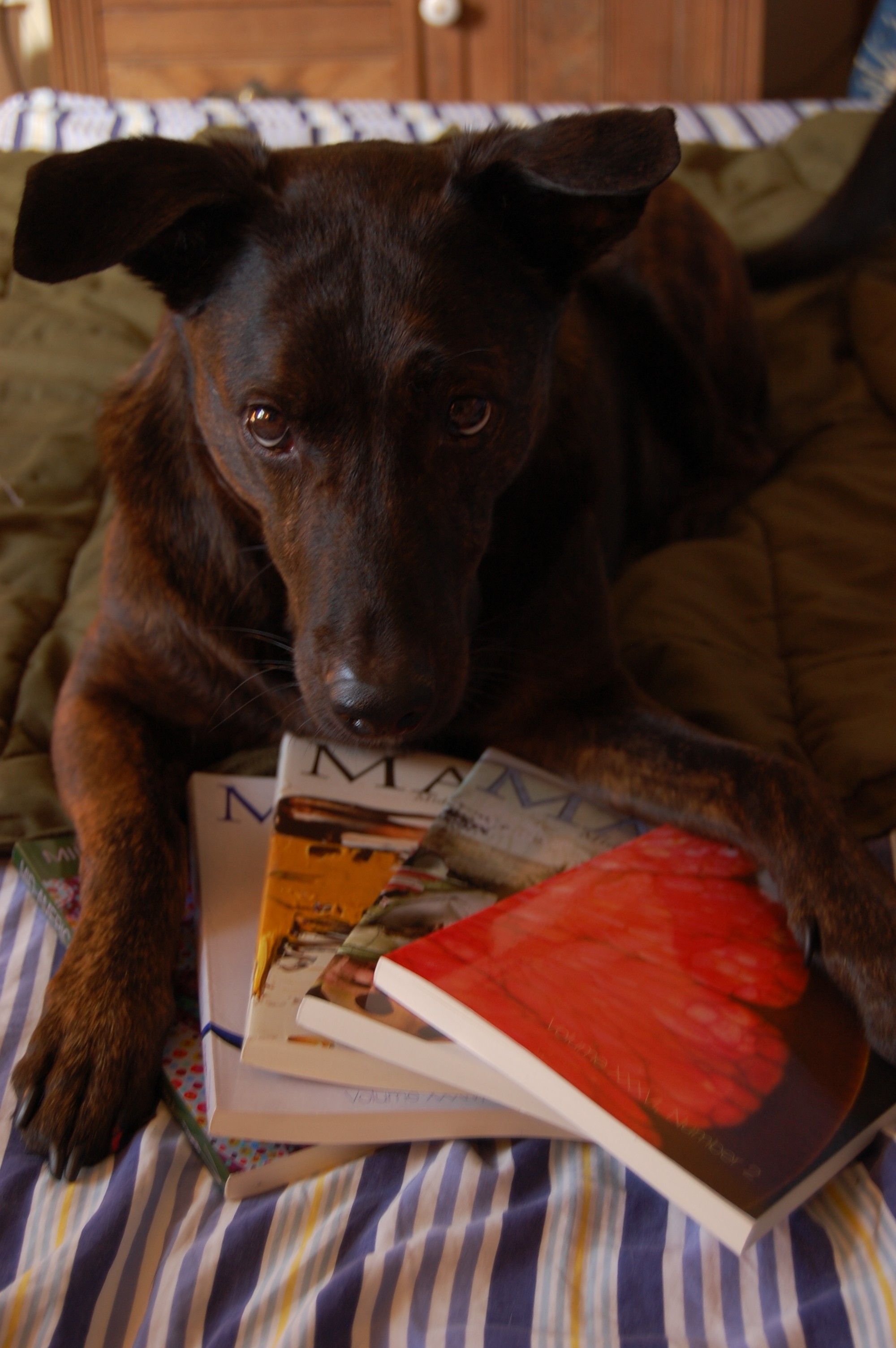
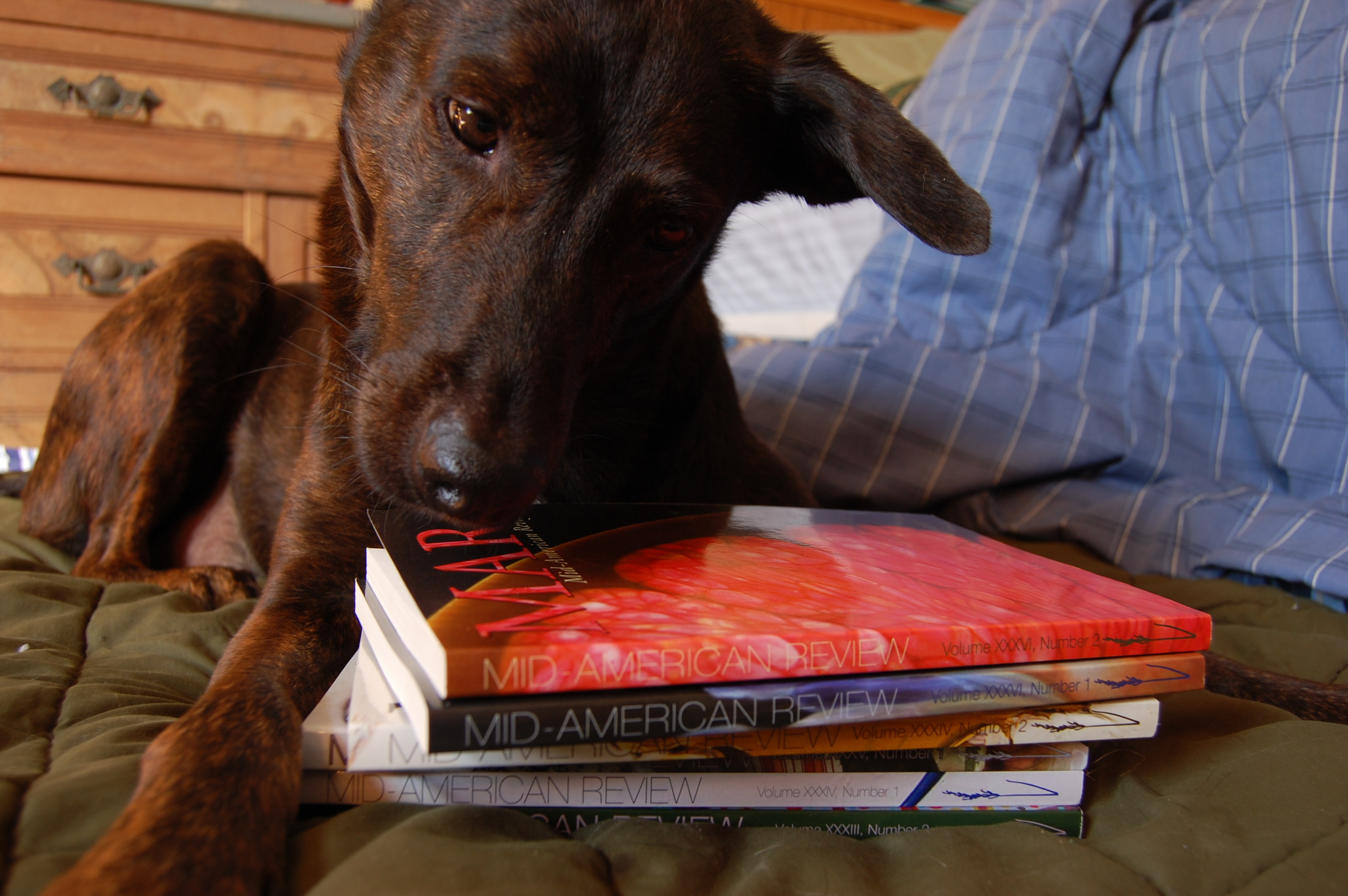
You’ve seen some cats, a bearded dragon, and now, let’s bring a dog into the picture. Get ready to meet Ori, owned by Teri Dederer. Teri is Ori’s faithful and devoted human slave, dedicated to carrying out his extensive feeding and exercise regime. She and Ori have been together for seven wonderful years, beginning in Pittsburgh, Pennsylvania and ending up here in Bowling Green, Ohio where Teri is a second-year graduate student pursuing her M.F.A. in fiction. She is the Fiction Editor at the Mid-American Review.

Now, let’s meet Ori!

Job: MAR reader/contributor

Title: Head of the Committee for the Veracity of Animal Characterization (CVAC)

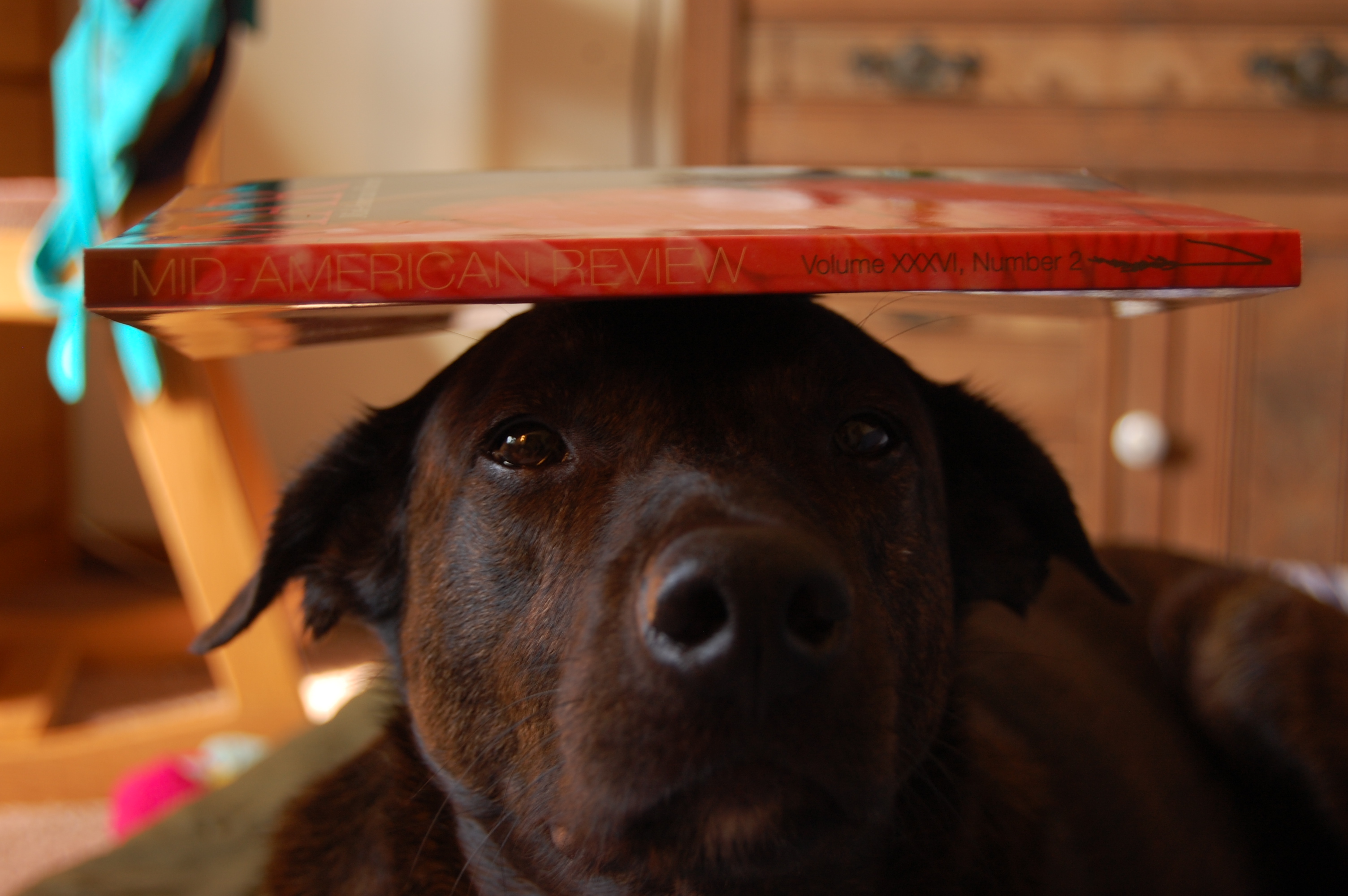
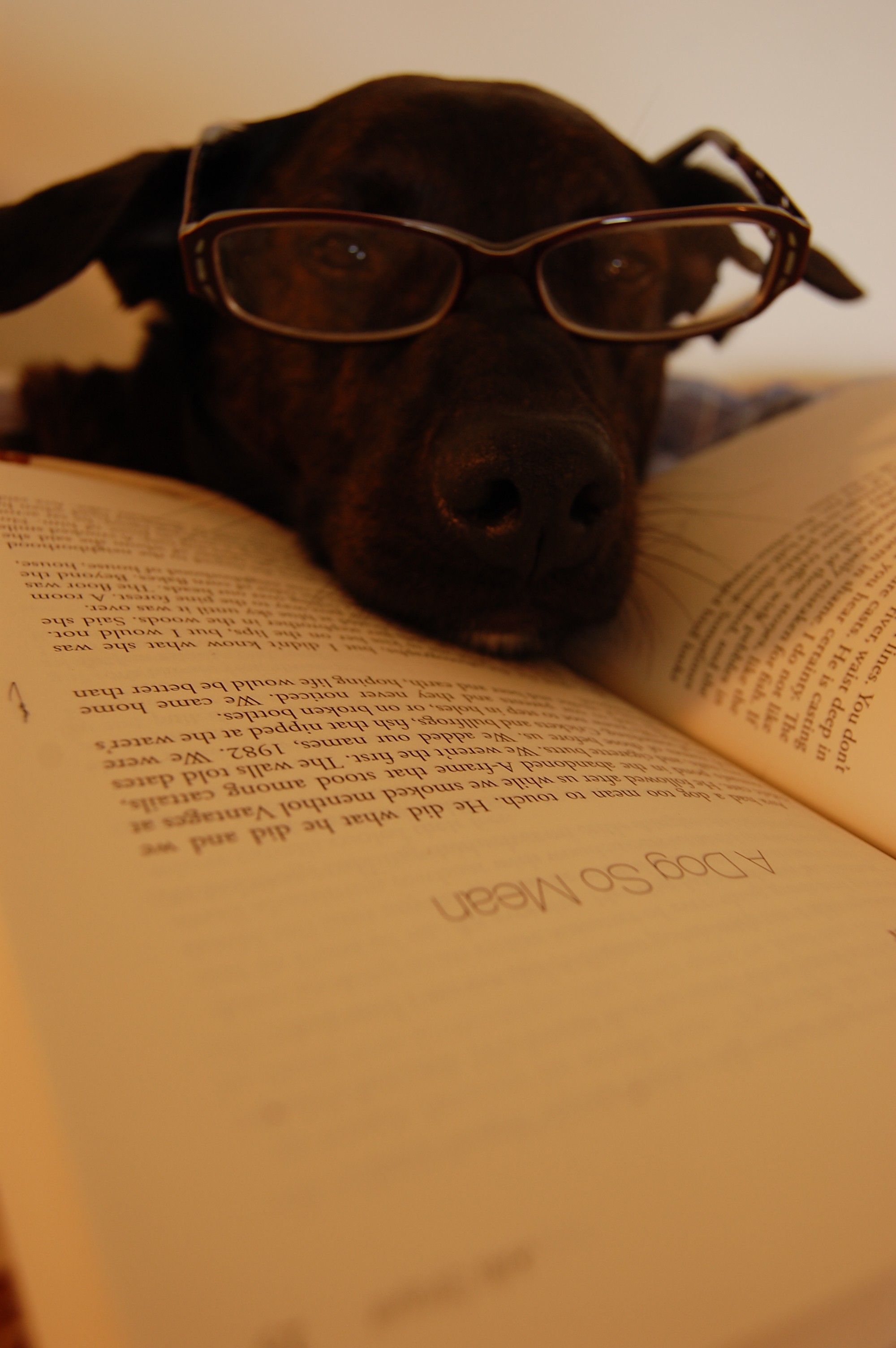
DSC_0015 DSC_0019Meet the amazing, the wonderful, the one and only, Ori! Entering into his middle-age, Ori would ideally like to eat and nap his way through each day. His laid-back personality stems from his island roots, given that he was rescued from St. Maarten. In dog terms, Ori is a Coconut Retriever, which is simply an island mutt of unknown origin. Rescued when he was still fairly young, Ori had had his fair share of health concerns, having to undergo treatment for Lyme disease, heartworms, canine ehrlichiosis, worms (eww!)…but now he faces the threat of the developed world—obesity. Ori is happy to report that having undertaken a rigorous running program, his figure is now trim and slim once again.

Always a bit shy and timid, Ori would prefer that all people let him do the “covert sniff” upon first meeting, whereupon you ignore him, and he MIGHT decide to give you a sniff when your back is turned. Despite his social anxiety, his affection can be bought with high-quality dog-bones.DSC_0037One place that Ori always feels secure is at the MAR classroom! Ori is a frequent contributor toward discussions, and as Head of the Committee for the Veracity of Animal Characterization (CVAC), he is a valuable consultant for our team.

DSC_0025

*Please note: no animals were harmed in the making of this ridiculously cute blog post.

Chapbook Review: My Fault by Leora Fridman

My Fault by Leora Fridman. Cleveland, Ohio: Cleveland State University Poetry Center, 2016. 86 pages. $ 16.00, paper.

The ambiguity of Leora Fridman’s title, My Fault, is compelling. Perhaps this is a collection of confessions of guilt, intended to clear the speaker’s conscious? Fridman does not offer a direct answer to this question, but rather leaves it up to the reader to interpret the meaning behind her words. While her prose poems are very clear in language and sentence structure, the message is often hidden and requires a second or third read. Sentences that seem to be nonsensical at first, will eventually reveal their meaning, like in “Factions”, where she writes:

I have not found

any skin yet but I will

be there soon, just as

soon as I can fight off

the beavers peeling fibers

from my scalp, trying

to open my mind,

making me feel far

more awake than

I ever intended to find

myself, laughing at

how much human I am

My Fault does not focus on one particular topic, but on a plethora of personal thoughts of the speaker, evolving around everything and anything that is important to them.

– Tanja Vierrether, MAR

Spotlight on Coral Nardandrea

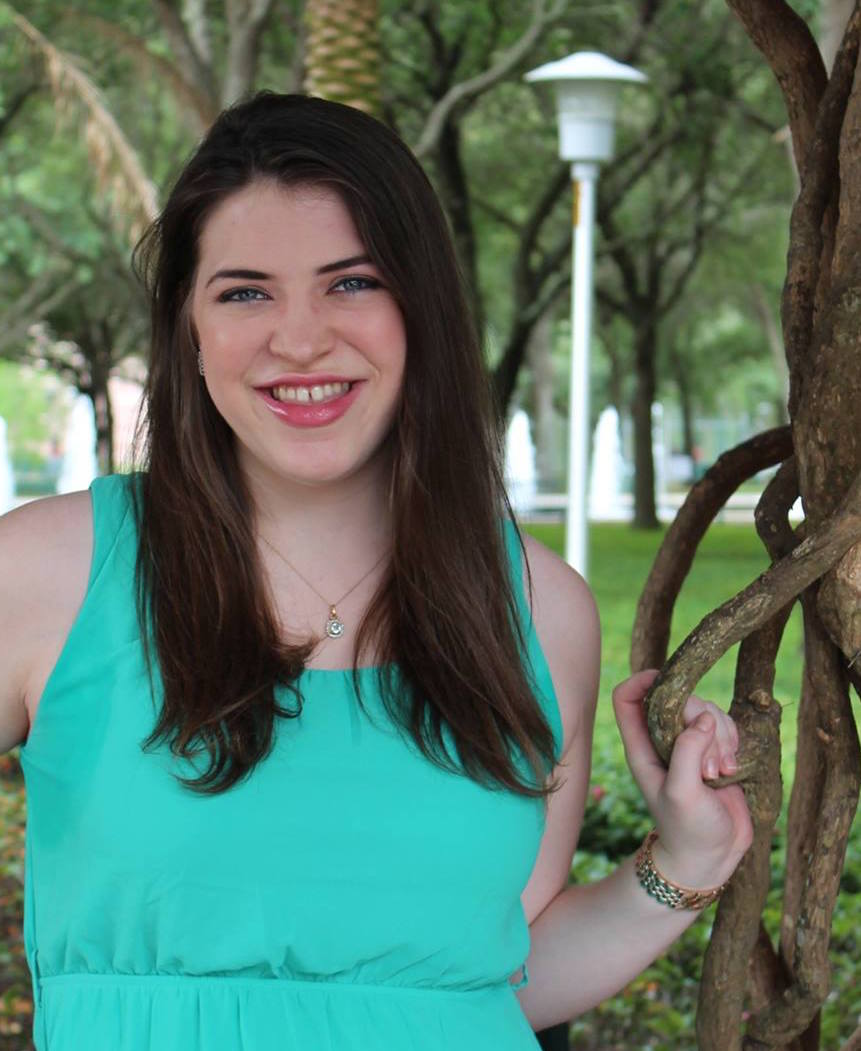
Mid-American Review would like to feature Winter Wheat Festival of Writing Coordinator and poetry editor, Coral! cropped mar pic

Coral Nardandrea hails from Ocala, Florida, a small horse town landlocked in a state known for its oceans, swamps, and glades. She got her undergraduate degrees in creative writing and women’s studies, which complemented each other more than you’d think. She came to Bowling Green to get her MFA in poetry and to get to know another small, landlocked town. This year, Coral is coordinating Mid-American Review’s Winter Wheat Festival of Writing and serving as an assistant editor on MAR’s staff. She’s enjoying the other side of the country (and its seasons) so far, though she wishes there were more trees.


Q: What drew you to the writing world?

C: Just a love of stories, really. I started making up stories when I was pretty little—all of my toys had extensive, dramatic backgrounds. Each time I sat down to play, I had to decide what the story was—who was related to who, their likes and dislikes, where they were from, what their goals were. Eventually I started writing those things down, because acting them out wasn’t enough. I was always reading, too, and that really nourished my imagination.

That shifted a bit, of course. In college, I was converted from fiction writing to poetry, and my appreciation of words and what they can do is always growing. While I still lean towards the narrative—a good character, a good story—my understanding of how words shape that narrative is much deeper.


Q: How has your time in the MFA been?

C: I really enjoy the writing community we have here. Our cohort is very close-knit, and it’s amazing to be surrounded by people who are creatively wired, who can discuss the pros and cons of Sylvia Plath’s rise to fame over a beer or two, and who will make time for a road trip to see Rita Dove in the middle of a school week. My writing has also really improved from being immersed in poetry and connected with people who love it.


Q: What makes you want to accept a submission?

C: I’m always looking for something that makes me perk up a little. If the language can make me say, “Oh, that’s different from the fifty other submissions I’ve read today,” I’m perking up. Also, the fiction writer in me always loves a good narrative. Poems have to matter. You have a short amount of time to pack a punch, to tell me something important, and I want to feel changed by the time I’ve finished your poem.


Q: What’s your favorite story/poem MAR has accepted?

C: This is hard! “Lesson” by Christina Duhig was a poem I fought hard for when we discussed its publication, so it has a special place in my heart. But I think my all-time favorite has to be coming up in Volume 37: Matthew MacFarland’s “Mosaic Floor Depicting the Rape of Persephone, Uncovered at a Tomb in Amphipolis, Greece, October 2014.” There’s just something so quietly haunting about it. It’s a powerful poem. I’m so excited for everyone to read it.


Q: What’s the best advice a writer has given you?

C: I’m lucky to have a lot of mentors in my life who give amazing advice. Probably the most helpful thing I’ve ever been told is to be kinder to myself. To stop saying “should.” There’s enough rejection in the writing business without adding my own doubts before I can submit a packet to a journal or print a poem off for workshop. I’m still working on this, but respecting my poetry for what it is has helped make me a more confident writer.


Q: Best experience in Bowling Green so far?

C: Honestly, each week has been its own grand adventure. Spending time with those in my cohort, whether we’re watching trashy television, staking out the Black Swamp Festival, or riding every coaster at Cedar Point, has always left me with a story to tell or an inside joke to reference. The people have made my experience here, and I’m glad to know them.