
Winter Wheat is less than three weeks away! Have you registered yet? This year’s festival will take place November 6-8th at Bowling Green State University in the Education Building. We are offering over thirty generative and informative workshops. Whether you want to learn more about publishing, explore experimental writing forms, blur the genre lines, or learn how to get unstuck from the middle of your work, we have workshops for you! You can see our full schedule of workshops here.
Not sure what to pick? Too many decisions? Check out some of the potential workshop pathways we’ve brainstormed for you!
Session Archetype Paths: Choose your Fighter!
The Activist: Are you interested in art as activism? How your poetry, fiction, or nonfiction can be impactful? Do you want your writing to stretch beyond the page? Think about your work as it lives in the world? Then check out this workshop pathway!
Suggested track: AZ1 → B4 → C4 → D5 → E2 → F4
The Wanderer (a.k.a. “I’m stuck” or “I want something fresh”): What better way to get unstuck than to hear other writers talk about their processes and methods? How about stepping outside your comfort zone and exploring experimental forms, flash, surrealism, or prose poetry (Maybe something short and sweet will spark new ideas)? Or maybe you just need a session on how to get through the trickiest part of your novel? With a balance of generation, process, and methods, check out some of our sessions on flash, writers talking about other writers, and how to get unstuck.
Suggested Track: A2 → B3 → C1 → D4 → EZ-4 → F1 or FZ-5
The Magician: Are you interested in genre work? Worldbuilding? Magical realism, fantasy, or horror? Check out some of these creative workshops on myth, fable, roleplaying games, monsters, and more.
Suggested Track: A4 or A5 → B1 → C2 or C3 → D-Z3 → E1 → F2
The Girl Boss: So you want to publish? Or maybe you just want to grow your writing career, hear about the industry, or learn about submitting to magazines. Read about our sessions that discuss writing query letters, marketing, or generative sessions that help you create short pieces ready to send out!
Suggested Tracks: AZ-1→ BZ-2→ C2→ D3 → E3 → F3
The Experimenter: You’re a nonconformist. (It’s okay, you can say it aloud). You’re the protagonist in a chosen one novel or the rebel in a dystopia. You’re a rulebreaker. Some of these workshops might just be as strange as you as they explore weird perspectives, gather from other nontraditional sources, think about weird forms or structures, and spark new ideas using ekphrasis.
Suggested Track: A3 or A5→ B2 → C3 or C5→ D1 → E4 → F3 or F5
We hope you find something to spark new ideas, suits your fancy, or makes you excited to write and be in community! We can’t wait to see you there! Register here.
Winter Wheat 2025: Call for Proposals
Winter Wheat is coming! We are now accepting proposals for our writing festival, to be held November 6-8, 2025, at Bowling Green State University.
What is Winter Wheat?
Winter Wheat has been a site of community and conversation for writers of all backgrounds—undergraduate and graduate students, faculty, and community members. Our festival is free and open to the public with workshops focused on craft and generating new writing, as well as readings, a book fair, and an open mic on Saturday night for anyone who wants to read their work. In the past, the festival has included flash contests, DND sessions, and other unique experiences, which are traditions we hope to continue.
This year, Winter Wheat is celebrating its 25th year, and with this celebration, we hope to highlight all that the festival has done and continues to do to help writers thrive as a community. Much like our name implies, we hope to plant the seeds to produce writings for future harvest. Workshops are meant to spark creativity, get pen to paper, and leave you feeling energized to write in new ways. To read more about Winter Wheat, check out our staff member Garrett Miller’s personal essay here.
What are we looking for in proposals?
Winter Wheat’s workshops are generative in nature, but we are also excited about proposals that are collaborative, playful, informative, and unique! In 2024, we held workshops that walked through the Marine Lab, crafted DND character sheets, and cut up and carved out collage poetry. We want your workshop proposals for guiding writers through the publishing industry, but we also want to hear about that niche genre interest of yours focusing on ghost stories in space; your funky, weird thoughts about how to get through a plot hole or find the perfect word; or how to craft a character that’s convincing by meditation or goat yoga or eating too many Doritos.
We are accepting proposal submissions until September 24th which you can submit here, and all are invited to register beginning on October 3rd. If you have any questions, you can reach Hannah Goss, 2025 Winter Wheat Coordinator, at winterwheat@bgsu.edu. We hope to see you there!
Contest Winner: The Excavator and The Weaver
Written by M.M. Porter

M.M Porter’s flash fiction piece titled “The Excavator and The Weaver” was selected for publication as the winner of the Winter Wheat 2024 Flash Fiction competition. During the competition, participants are given a short period of time to write a flash fiction piece from scratch. After each contestant completes their piece, the winner is selected through several rounds of crowd voting.
Author Biography: M. M. Porter is attending Ohio University to pursue her PhD in English with an emphasis in Poetry. She is a graduate of the MFA poetry program at the University of North Carolina, Greensboro. She has been published in Epiphany, The Shore, and has been nominated for a Pushcart Prize. Originally from Michigan, you can find her work at mm-porter.com.
The son of the blacksmith had always been in prison. There was no before or after, for him; there wasn’t even a now. Not a now like you and I know. He just was in prison. The moon hadn’t learned to spin and the sun hadn’t performed a pirouette. This was because time had not yet been made.
The daughter of the cobbler was also in prison, the way one is imprisoned when nothing changes. The pair had no need of anything, and didn’t really mind their prisons. Occasionally, the two would talk. It was only before, after, and between this talking that the pair decided that they didn’t care much for prison anymore. The cobbler’s daughter wanted to find a way out of their cells. The son of the blacksmith wanted to find a way to merge their cells.
He thought they would be content, if only they shared. Often, he would take his nail and scratch at the wall between them. The prison walls were skeptical of this, because the blacksmith’s son was trying to change things. However, the rocks allowed such things, if only to breed a new contentment and stillness. And though, for us, nails against rock would take a lifetime to break, the son of the blacksmith had no such concerns. And thus, the cells became one, and they talked face-to-face, and space was born. Black and brilliant. Infinite.
But the daughter of the cobbler was not contented. She insisted there would be a way out. All this space had made her cold. Besides, If they could combine their walls, they could do other things. But nothing happened, and how could they escape if no dog with a key in its mouth came down the hallway? Or no guard fell asleep? Or no food was brought by a pitying kitchen servant?
So the daughter of the cobbler took the only thing that seemed to change, and started to braid. She pulled black hair from her head, and blond from the son of the blacksmith’s head. With each hair she threaded together, she felt hope overtake her. She shaped their hairs patiently until they formed a stiff key. She placed it inside the lock through the bars, and turned the key. The son of the blacksmith was scared, but the bars were already opening. And as they stepped out, time began to unfold.
Copyright Credit: M.M. Porter, “The Excavator & The Weaver.” Copyright © 2025 by M.M. Porter. Printed by permission of Mid-American Review.
Personal Essay: Winter Wheat 2024 – In Review No. 6
By Garret Miller
I’ve been tasked with capturing the spirit and experience of Winter Wheat 2024. I’ll offer first a series of images and momentarily shift responsibility to you, earnest reader: imagine the Education Building, in all its eastern bloc nobility; a gaggle of impassioned writers, buzzing in disquiet; dark, fall evenings with winds a shade warmer than we deserve; and a smooth Saturday morning where hope sprinkles in tease of snow. There was coffee. There were snacks. Writing was done. Some learning, too.
But it’s all best stated by our presenters, guests, and organizers.
Nathan Fako, poetry MFA student and co-presenter of the Elegies for Disappearing Nature workshop, finds that Winter Wheat “was fine, wonderful. It was warm. Gatherings of writers… I feel like we’re all kind of awkward people. We wanna keep to ourselves. We like to be alone to think. There’s an apprehension, generally, when we get together, but the warm atmosphere assuaged that feeling. It was fun.” He felt that the “workshops were accessible. There was clear work put in to make the content accessible to someone with no experience with writing, but also to make it interesting to those who are experienced.” His concluding thoughts, which should be remembered: “I’ve never been to a literary festival before, and I really enjoyed it. I thought it was great. It was nice to see so many people passionate about the same thing. I find that heartwarming. Or terrifying. I don’t know which.”
Liz Barnett, fiction MFA student who presented on adaptation, found that Winter Wheat “went really well.” They stated, “In the end, I had a lot of people tell me it was fun. [The workshops] I went to were accommodating; they provided materials, it never felt like I wasn’t prepared, and it didn’t feel like I was being excluded from any activities.” Liz said finally that they’re “looking forward to running a workshop again next year” that will explore revenge stories.
Michelle, an attendee, offered similar sentiments on the warmness: “I had concerns that Winter Wheat would be workshops where the presenters sort of droned on about things they didn’t seem to really care about, but I was happy to find that the presenters had interesting topics that I didn’t know much about. They seemed excited to be there but also relaxed. It felt like nobody was going to make fun of me for my lack of poetry knowledge.” She thought “people were going to be stuffy and have very specific and intense rules for writing,” but stated, “Thankfully, I was wrong. I feel like everyone there was open-minded and interested in exploring many different styles of writing.”
Abigail Cloud, Editor-in-Chief of Mid-American Review, thought “it went really well. People really needed it this year in a big way. There was a lot of worry going on, particularly among our population. People needed to be together and create together. [Attendees] wanted that opportunity to work in inspiring circumstances that are safe, where they can create and not be worried about anything else besides new work and new ideas.” Cloud spoke at length about the generative importance of Winter Wheat, how it “puts focus back on creation, the generation of new ideas and work,” an attitude shared by Haley Souders, Winter Wheat Coordinator. Souders stated, “I always come out of [Winter Wheat] wanting to write more. This year I left wanting to take a look at my thesis project. I feel like I’ve been in a little bit of a gray area with it, where I’m not feeling as much joy writing it, but after spending a few days talking to people who are interested in writing, I feel inspired.”
Cloud also highlights regionality, the “quintessential midwestern aspects of comfort and value of togetherness.” For Cloud, Winter Wheat fosters a sort of camaraderie: “The region, as much as it is here, it is a place, it is more about the attitude and knowledge that we are coming to a place that represents some level of comfort to people.” Souders also touched on the importance of place, stating, “I feel like the words “literary community” have gotten thrown around a lot when talking about Winter Wheat, but having events that are free to attend is important because people from all over can come together to talk about art and writing. Who knows in five years if we will be able to do these things? Humanities are being defunded across the board. It’s important to have [Winter Wheat] and maintain it.”
Finally, Cloud defines Winter Wheat: “The word I’m going to pick is fervent. There’s a real desire to put new work together and take advantage of seeing friends. That’s how I felt. I had some friends there that I haven’t seen in a really long time. I wanted to fervently soak time up with them while they were there with me. I think that’s the best energy that we can hope for and create, just having an immediate connection and desire to what we were doing.”
And here’s what I’ve been thinking about lately, pre and post Winter Wheat: among a few other pesky things, John the Savage tells us to find poetry, God, freedom, sin, and goodness. His distant cousin Alexander Supertramp tells us to honor Ahab, but advises we not forget the dominant primordial beast. Locate ambition, but do not forget hubris. Writers are strange; sometimes we are arrogant, sometimes self-dismissive. Maybe we have ethereal jobs, biblical duties, and great importance – maybe not. It does not matter. Find a warm atmosphere with gentle souls like Winter Wheat, sit awhile, and play toward peace.
Interview with Abigail Cloud: Preparing for Winter Wheat No. 21

by Carolyn Hogg

Abigail Cloud and Haley Souders were interviewed on October 30th, 2024. This interview took place almost 1.5 months after the first interview with Souders and Cloud. Abigail Cloud is the Editor-in-Chief of MAR, and Haley Souders is serving as the Winter Wheat Coordinator this year. During this interview, we discussed preparing for the festival and advice for attendees. Winter Wheat 2024 starts tomorrow Thursday, November 7th. We hope to see you there!
Registration for Winter Wheat 2024 is still open. You can register here: https://casit.bgsu.edu/winterwheat/2024-registration/
About Winter Wheat:
Winter Wheat, created in 2001, is a festival celebrating writers and readers, produced by Mid-American Review and hosted on the campus of Bowling Green State University. In workshops, students, faculty, and guests from the Bowling Green community and beyond come to learn, discuss, read, and most importantly write. Through “keynote” readings, special guest authors read their work, sign books, and talk with Winter Wheat participants. Winter Wheat creates the ideal environment for graduate and undergraduate students, faculty and staff, community writers, and those from other states to mingle and create new work, effectively planting the seeds of new writings for future harvest. There is no fee to attend Winter Wheat. The festival is sponsored by MAR, the BGSU Ethnic and Cultural Arts Program, the Creative Writing Program at BGSU, Prairie Margins, the Graduate Writers Club, the Creative Writing Alumni Fund, and donations from attendees. The festival would not be possible without donors! Donations for Winter Wheat and MAR can be made online, or through checks made out to BGSU Foundation, with Mid-American Review in the Memo line. Donations may also be made onsite, with cash, check, or credit card. Thank you for your support. Now, please see the interview below.
Interviewer:
What advice would you give a first-time attendee for the Winter Wheat writing festival?
Haley Souders:
Last year was the first writing conference of any kind that I’d been to. I remember when I went to AWP later, I was really overwhelmed, but I think since Winter Wheat is only two days, I didn’t feel as overwhelmed. It’s good to plan one workshop period where you don’t go to any sessions and just take a break for your mind. I remember after some of the workshops I just wanted to sit down and write afterwards because it’s a very fun environment to be in where everyone is talking about writing. You get to write in the workshop, and it just makes you want to write more.
Abigail Cloud:
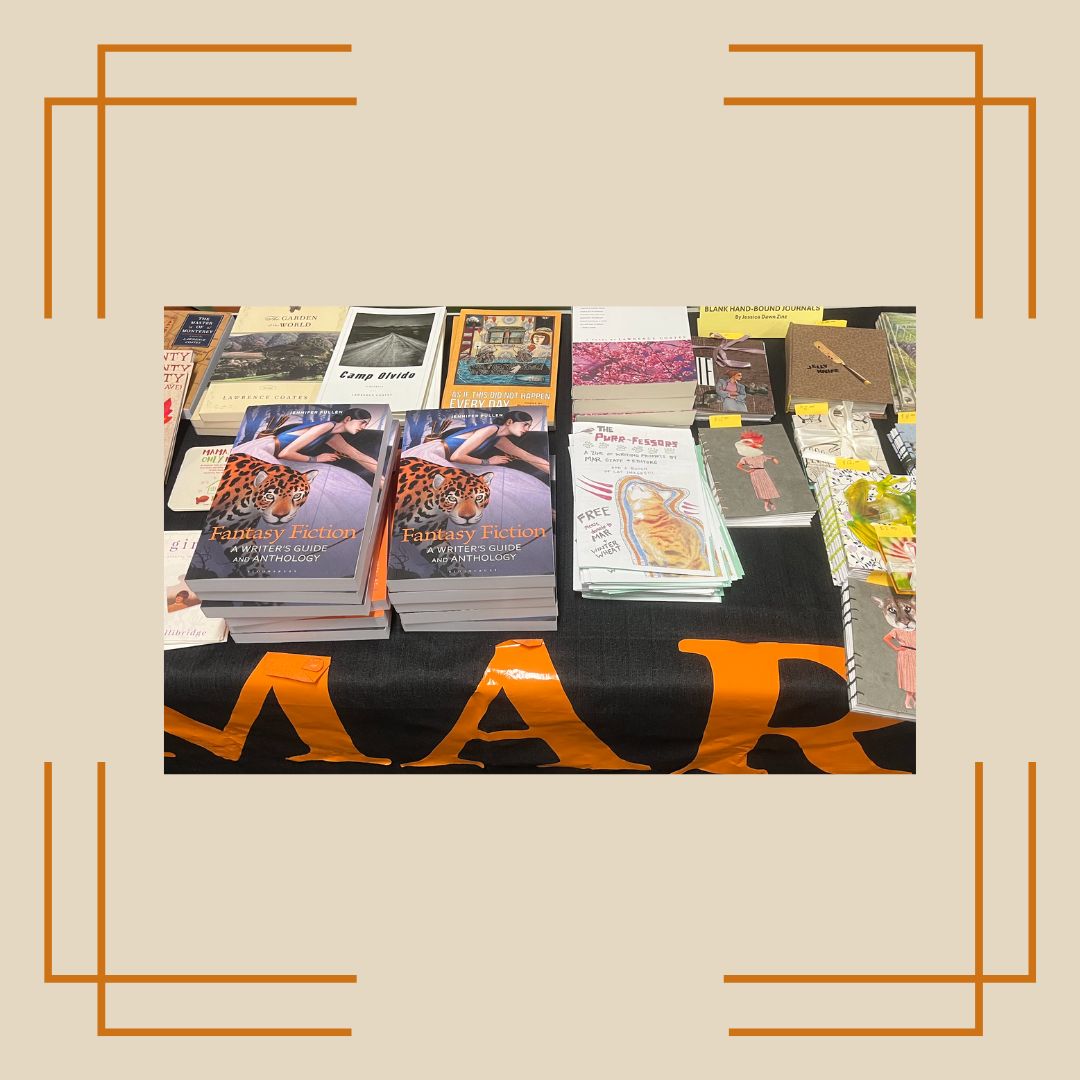
That’s true. You’ve got to have a good notebook, a couple pens & some pencils. When you’re thinking about coming for the first time and wondering what it’s going to be like, we don’t know either. We know to some extent, but it’s a little different every year. We don’t know who all is going to show up. It’s never really chaotic (I need some wood to knock on), but it’s flurried at some points and then super quiet at other times. So it’s good to be ready for that ebb and flow of traffic and flip traffic. And, understanding your role in it is as a creator. We’re in charge of the festival as staff members of Mid-American Review, but we’re also creators, and we need to take advantage of that. And that’s the same thing with AWP. You never do get a chance to settle down at AWP, not really. At Winter Wheat, you have the opportunity to talk to presenters. We do our own book fair table where our presenters can bring their own books and we sell their books for them. So you can actually meet those people onsite. And it’s a nice opportunity to support authors directly because we’re not ordering the books from the presses or through a bookstore; they’re bringing the books, so that money goes directly back to them. That’s a great way to support them and also to have an immediate reminder of the types of things that you were working on in their workshop.
Interviewer:
You mentioned every year being a little different. What’s new this year?
Abigail Cloud:
DnD! So we had Dungeons and Dragons a few years ago–an organization called Tales of Initiative did some one-shots and it was really fun. There were a whole bunch of people who were interested in learning about DnD. So this year we’re doing a little workshop ahead of time using Dungeons and Dragons character sheets to talk about characters, the brainstorming that goes into storytelling, and how that practice can help you write your own fiction. We’re doing the one-shots again, and we’ll have an experienced table and a beginner’s table so people can learn how to play. People can also spectate if they so choose. A couple people two years ago just wanted to spectate, which I thought was amazing because I like doing that too, just doing some work while people are joyfully coming up with all manner of magical excitement. So it’s a fun little thing that embraces the ability to tell a story on the spot well as collaboratively. Also, Jennifer Pullen is coming for the Saturday keynote reading/craft talk, and she’s also giving a workshop on fantasy fiction. And since we don’t have fantasy fiction here as a class, this will be a good opportunity for students to embrace that side of writing. We certainly have many students who are writing fantasy fiction and we want to give them the opportunity to learn and grow. Also, this year our Saturday night open mic is at Juniper downtown. We’ve had a couple different locations over the years and Juniper happened to be available this year. So I’m greatly looking forward to fair fries.
Interviewer:
Are there any other workshops or readings that you’re especially excited about?
Abigail Cloud:
I typically do not get to go to stuff. I’ll make Haley go to stuff. It’s so easy to get distracted by the business side of things and everything else that’s going on constantly, people with questions, and so on. But as much as possible, it’s important for us to also show up and to be there as participants. Haley, which ones are you excited about?
Haley Souders:
I’m excited for the “Walking with(out) Purpose” workshop with Brad Aaron Modlin. It seems like it’ll be really interesting and different. I think getting that movement in during the workshop will be fun. And Sydney Koeplin’s Workshop, “Dreamweaver,” which is about writing from your dreams. I’m excited for that one because in the past I used to write from an idea I’d get from a dream but I don’t think I’ve really done that much recently. So I’m curious to see if going there will start that back up again for me.
Abigail Cloud:
We also have a couple specific workshops that are about finding your own voice and your own craft. Sophfronia Scott is doing one called, “Almost Straight to the Heart,” on the self-discovery process, using self-discovery as a way to unpack ideas and thoughts. And Naomi North, who is an alum, is doing one called “You Can Tell Me Anything” about finding your own authentic writing voice. They’re both framed almost in terms of an adventure (just as the walking one is), that challenge of digging into your internal self. We also have a couple that are based on family history or using history in your own writing. We see this sometimes in trends, a trend toward wanting to find authenticity and wanting to uncover memories and use them regardless of genre, not just in creative non-fiction or memoir, going deeper into that and seeing what it can spark. So that’s great and it’s feeling very organic in that way.
Interviewer:
I think I’m going to Jessica Manack’s “Writing Your Family Tree” and Naomi North’s workshop, so I’m really excited for those.
Abigail Cloud:
It might feel a little bit like we’re on a retreat. It just sort of has that vibe right now, and I’m not mad about it. I love that.
Interviewer:
Shifting over a little bit, do you have any advice for starting up a regional conference like Winter Wheat?
Abigail Cloud:
When you’re dealing with a festival or conference that’s part of a university, your rules are so much different than when you’re doing it yourself, when you’re doing it independently or as part of an organization that is non-university. You have rules at a university but you also have resources. Technology for instance–it’s in the classrooms already. We have the educational buildings available. If we need it, there’s catering. If we need tech services, there’s tech services. So all of that is built in but there’s also the need to follow policies. So just little bits and pieces like that. And being aware of those types of things. I think the main thing that most people face is just getting people to go, getting people interested, using social media and other forms effectively to build up your base. We have a base that’s been built up over twenty years of people, of past participants and contacts. We’re constantly updating the contact list, adding more ideas, things like that. But as an independent organization, getting all of that work done, in addition to all the infrastructure, there’s just extra to do. So, I think it’s good to know whether you want to do it as part of a joint project with a university or an organization, or if it’s something you’re going alone. And then figuring out who your base is going to be. Especially because we’re not out here giving each other our participants list, which I know is a common business thing, but it’s not something that we do. I’m also very stingy with subscriber lists. I’m not into just making those available to people. So I think having some idea of costs and some idea of your base is kind of your go-to, but also just deciding on your vibe. They’re all different. AWP has a very AWP vibe. I don’t even know how to explain it. It’s more scholarly, less craft. There is some focus craft but it’s more about writing than doing the writing, at least on the spot. We’re about doing the writing on the spot. I also think it’s important to think about what you need in your area. What is your area missing? That’s not easy to do sometimes. You really have to be plugged in with the community in order to know what’s missing and what people want. It’s good to do that ahead of time and that also helps if you then go for grants. Arts council grants want to know what your goals are and who your constituents are and what those people have said and what they’re interested in. Having feedback and community involvement increases your panel score generally, so that’s good to utilize.
Interviewer:
Sounds like there’s a lot of networking going on. And a lot of moving parts.
Abigail Cloud:
So much networking and a lot of moving parts. And there’s planning that you can do ahead, but you also just have to let things happen in their own time. I have trouble with that sometimes but Winter Wheat has helped teach me not to over-manage. It’s going to happen regardless. It’s happening. We have the things done. Haley’s been working so hard and getting the word out. People are registered. So I just need to not flip out about it all the time. And that’s probably my best advice for someone starting a writing conference. Get some help you trust and then don’t flip out.
Interviewer:
Haley, any big lessons from doing the Winter Wheat assistantship this semester?
Haley Souders:
I think the biggest thing I’ve learned is the importance of having a spreadsheet. I feel like there are so many things to keep track of for something like this and with me doing it for the first time, it would be really easy for me to get overwhelmed. But because of the way that everything has been organized where we have the list of things that need to get done and we have specific spreadsheets for the book fair and for workshops, there was never a moment where I wasn’t sure what I needed to do or where something was, or where to find information about anything. It was very well organized by Abby.
Abigail Cloud:
Well, by legions of past Winter Wheat people. This stuff grows up over time and we change the duties and the plans list every year. It has to change as new things come up or as policies change, as venues change, and whatnot. But it does at least give you a completion timeline and helps you understand what the direct lineup is. Here we are in one to two weeks before and we’re seeing the list gradually getting italicized as things get done. Even looking at it, I’m just like, ‘yep, okay, got some things that we need to do.’ This list gets longer and longer the closer we get, but again, it’s coming and it’s time. It’s happening as it needs to happen.
Interviewer:
How do you expect or hope Winter Wheat to evolve over the next few years?
Abigail Cloud:
I always like to hear from our participants about what they want even though getting feedback is really difficult. It’s hard to get people to fill out the feedback forms. I think hearing those ideas and seeing how our student population looks and what they’re interested in has always been a guiding force. And understanding that part of our job with a festival is to bring something to the community that it doesn’t already have. So whatever we don’t have, that’s what we do. For instance, we have Jessica Zinz who does collage poetry. She and Amanda McGuire Rzicznek do graphic novels and comics and they’ve worked on the word and image combination, which is why we now have the minor here at the University that students can do. They’ve really brought that to the forefront. That’s just not a thing that we had 10 years ago. So looking ahead, testing out new things like the D&D event, and knowing what our participants are interested in. It’s hard to predict where the writing world’s going to go but we do know that there are things that people are interested in more than they used to be, and we can bring those things to Winter Wheat. Bringing in different types of writers for the keynote is a great one that helps us keep pace with that. I’m also curious to know if we’re going to continue doing the hybrid sessions and how that might evolve. We do have some sessions on Zoom so people can participate and present from all over. So if that’s going to remain popular, we’ll try to do more with it. When we were all online the one year, I didn’t love it because part of Winter Wheat is the on-site community. But having some things hybridized still brings in the wider community. And being able to bring back people who have been here like alums and past participants is still important. I just didn’t like how it worked out with the open mics and receptions. Nobody really loves those online. So, finding new ways to make the online component work I think is going to be a challenge continuing forward.
Interviewer:
What about you, Haley? Any thoughts about the future of Winter Wheat?
Haley Souders:
I hope that I’m able to keep going in person and can see future Winter Wheats. I’ll definitely keep trying to attend online wherever I am, but I hope I can still make the trip back sometimes.
Abigail Cloud:
That’s one of our favorite things, having alums back. And seeing how their writing has changed and grown, and giving them the opportunities for further professional development and continuing that education. It’s nice to keep building those relationships and keep those people close.
Interviewer:
What are you most proud of about Winter Wheat and/or your involvement in it?
Haley Souders:
This is a weird thing to be proud of, but the social media part of it. I’m not a big social media person, and I feel like that is one skill I’ve directly learned from this job. I don’t know if I want to do marketing or social media things in the future, but it’s now a skill that I possess and can say that I have done and know how to do.
Abigail Cloud:
We have concrete examples to add to your portfolio. I’ve been pushing that really hard on my students lately, having a portfolio of the work we’ve done. Because when you’re applying for jobs or further schooling, you have that already there. You can already point to it and say, ‘this is a thing that I have achieved.’
Haley Souders:
Also, anytime I’ve directly answered an email from someone and I’ve gotten to see the excitement from people who are getting to attend, especially if it’s someone who is not currently affiliated with Bowling Green in any way. It’s just exciting to see how far Winter Wheat can reach.
Abigail Cloud:
Yeah, and it’s always nice when you see new people, new faces. As I’m looking at the registrations coming in, there are a lot of familiar names on there, which I love, but I also love seeing the new folks, ones who have identified that they haven’t attended before. And then sometimes we have alums and friends teaching elsewhere and they bring their students, which I love. I think having something that people feel comfortable coming back to is one of the things that I feel most proud of. It’s a comfortable environment. There’s a lot of camaraderie, there’s a lot of face-to-face conversation. One of the things we’re going to do this year is bring a large collection of our out-of-date literary journals and let people go through them and talk about submission strategies. And that’s how we’re going to start. We’re inviting people into the mess of submitting work right away, giving each other advice and so on. And I hope that that’ll spark conversation. Let’s face it–writers, we don’t always want to be perceived or out there talking to people. It’s not really what we do. It’s kind of literally the opposite of what we do. But Winter Wheat is our opportunity to be in a safe environment to do those things, to talk to people, to be perceived, and to make something new. That’s the spirit in which Winter Wheat was created, and continuing in that vein and representing, in a larger aspect, the spirit of Mid-American Review, is really important to me. I feel really good about that. And also my registration spreadsheet.
Interviewer:
If you had to describe Winter Wheat using only food metaphors, how would you describe it?
Abigail Cloud:
Mashed potatoes. I’m a potato person. I like potatoes, potatoes are part of my regular diet. They are my safe food. I find them comforting. I always want them. I’m always excited about them and you can do so many cool things with them.
Haley Souders:
My first thought was a bowl of Lucky Charms.
Interviewer:
Are you the kind of person who eats the charms mixed in, or who saves the charms for last?
Haley Souders:
I save the charms for last and have a bowl of marshmallows.
Abigail Cloud:
Lucky Charms is such a great answer because if you eat them straight from the box like I do, you can’t really see ahead of time what you’re about to consume–you just know it’s going to be delicious.
Haley Souders:
Thank you for validating my metaphor.
Interviewer:
If you could invite one of your favorite authors, dead or alive, to Winter Wheat, who would you choose and what do you think they’d be most excited about?
Haley Souders:
That’s so tough. My first thought is Charles Yu just because I was talking to Jane Wageman (MAR’s Managing Editor for 2024-2025) when we went to package everything to ship about how whenever I recognized a writer’s name, I was so excited and I was like, ‘oh my gosh, I’m touching this person’s mail right now.’ One of those people was Charles Yu. I don’t know what he would get most from it though.
Abigail Cloud:
We’ve published his story “Class Three Superhero” in Mid-American Review. He would come. If we could afford him we’d bring him. As for what he’d get from it, he would mostly receive our adoring eyeballs because we love him so much. I was going to say Brenda Hillman because she’s always my answer, but Dana Levin would be super great here. She is one of my poetry fairy godmothers. I love her enthusiasm and her dig-in mentality. I feel like she would be a really good reader but I also think she would in turn enjoy the generative workshops. I think she would like to create.
Interviewer:
Awesome. So we’ve covered a lot of ground. Anything else you’d like to add before we wrap up?
Abigail Cloud:
Everyone should come to Winter Wheat. It happens every year–put it in your calendar. It’s such a good opportunity because during the year we tend to get distracted from our writing. We’re doing all these other things, we’re wearing many different hats, and it’s so nice to be able to say, ‘this weekend, I’m going to write and that’s it. I’m going be with my own kind. I’m going to be with my people.’
Haley Souders:
Yeah, I’ll just just a second that. I feel like anytime I’m in a place where everyone is really interested in writing and we’re also talking about writing, it always makes me so much more excited to write than I am when it’s just me and my mind thinking about how I haven’t been writing.
Abigail Cloud:
Yes. Winter Wheat opens up so many doors.